

Ganawandaagwad Institute
Dokis First Nation has a proud history – rich, unique & complex.
NEW! The Sons of Manitous: a German Film (1978) about Dokis First Nation
Beendigen! Welcome Home
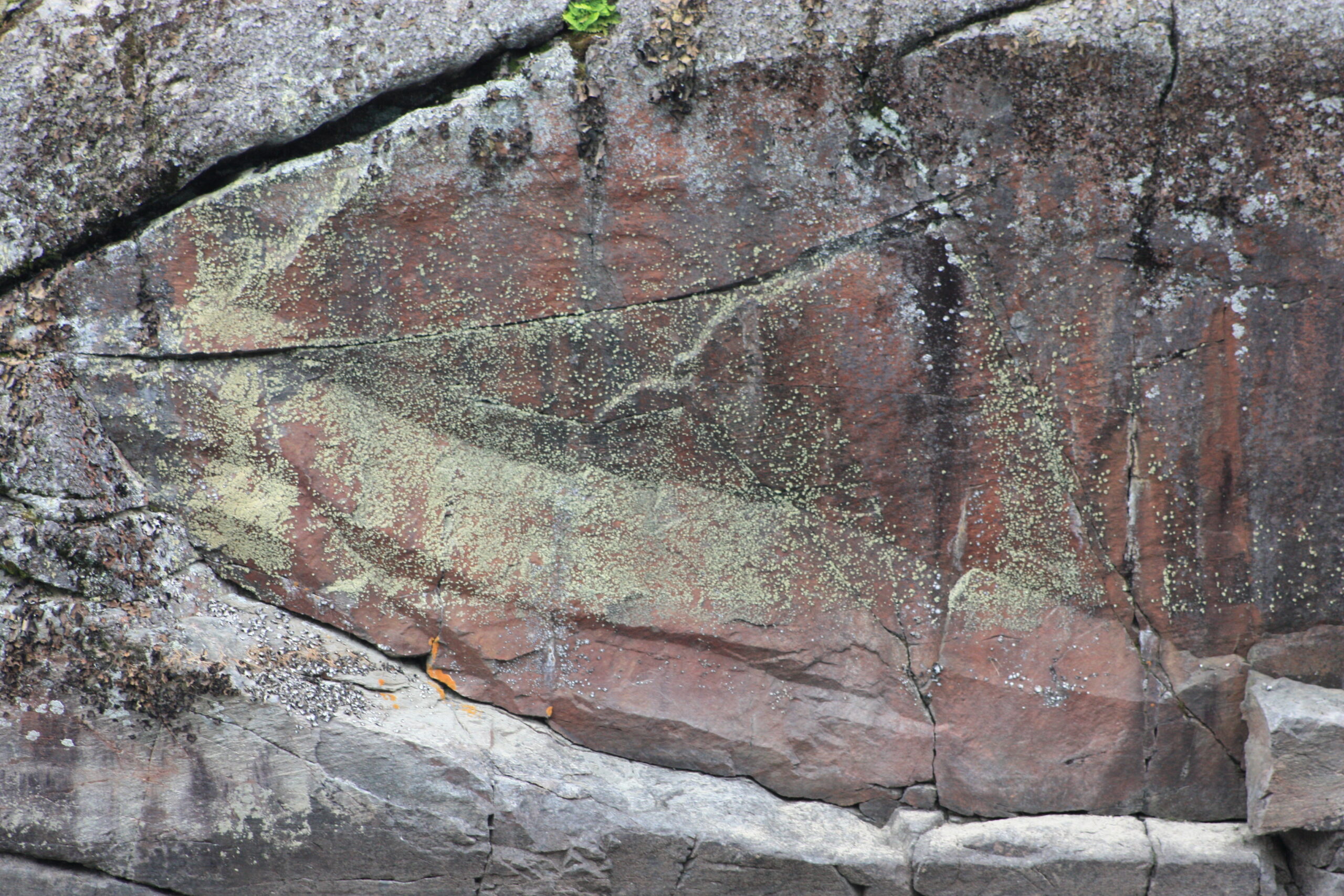
Manitou Greeting Rock, on the Lower French River, is a natural staining on the rock face resembling the Manitous standing next to each other and greeting the people going past.
Wherever you reside, this website is a place to reconnect, share and learn more about our collective history and heritage. Whether you are a community member, friend of Dokis First Nation or just have an interest in learning more about our unique community and its people, we hope you enjoy your visit.
Ngo Dwe Waangizid One Family

Our philosophy is that we, as Dokis First Nation members, are Ngo Dwe Waangizid (one family) with many extended family members and friends. With that in mind, Ganawandaagwad volunteers combined with the financial support of the Okikendawt Hydro Revenue & Dokis Community Trust Fund have committed to help “Preserve, Protect and Keep” history and heritage gathered by and for community members – past, present and future.
We will post new information as it’s found and will continue the spirit of sharing as our gathering of knowledge forges ahead. With your help we hope to tell a more complete story of our people, our land and our heritage. Even the powerful French River, that has always flowed alongside us as a friend and nurturer, has stories to tell.
Wemtigo Zibi French River
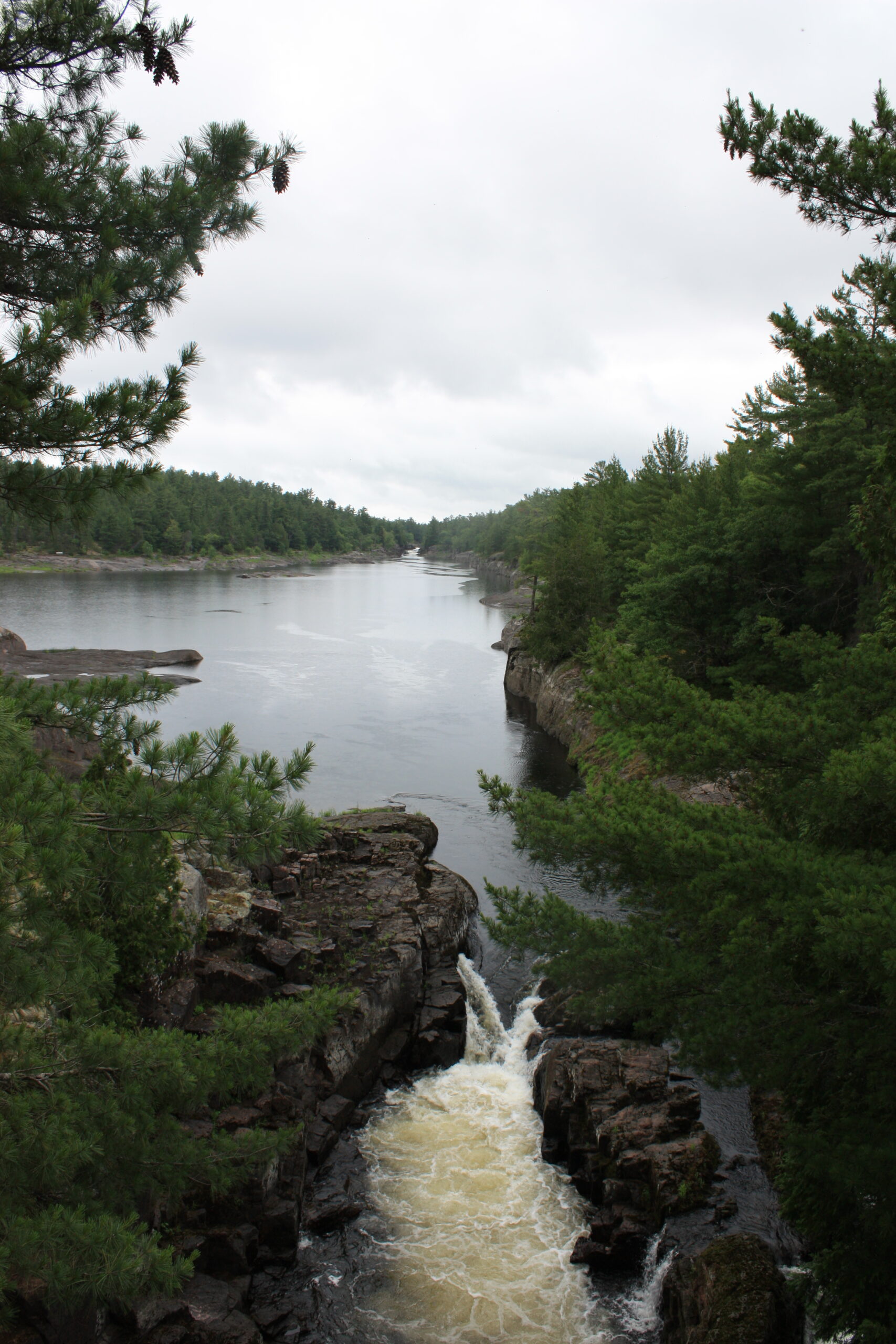
“The French River runs down from Lake Nipissing to Georgian Bay in a stairway of long narrow lakes connected by falls and rapids. The history of Dokis has been like the river of calm waters joined by stretches of trouble.” (Source: Eagles on the River)
The story of Life Chief Michel Eagle Dokis (Migisi) tells us of a man who had a vision for his people to thrive, to prosper and above all, to build and strengthen the community. He was a signatory of the Robinson Huron Treaty of 1850 and to this day, we benefit from his tenacity and foresightedness. He, along with his brothers Francois and Joseph Restoule and their sons established and maintained trading routes and posts that sustained the community.
Determination and perseverance to build the road in the mid-1950s by Chiefs John C. Restoule and Joe Dokis working together saved the community from out migration for jobs, health care and better schools. “…when Joe took over, then we worked together…in 1955 the bulldozers came in then we knew it will be a road someday”. (Source: Chief John C. Restoule, Eagles on the River)
Nandawaaban Explore on your own
Throughout this website you will find photographs, video clips and web links to help you with your family searches and the discovery of historical information. Visit them all – they may lead you to something that will assist you as you mahjetawin meekunaung (begin on the path) of rediscovering some of the history of our home and our people.
It’s important to know who we are and to reflect on the observation of G.E. Mortimer in his documentary “The Eagle on the Dokis flag symbolizes their control and their freedom.”
Bimaadiziwin Life takes us in different directions, yet we are all here right now.
Let’s continue this journey together.
Norman Dokis Jr., President of Ganawandaagwad Institute is a passionate believer in our ability to build a stronger nation of community members from all corners of Turtle Island. His collaboration in 2023 with community member Laura Dokis launched the Ganawandaagwad Institute.
Disclaimer:
The information presented endeavours to be as factual as possible, but we cannot guarantee that it is all correct, complete or interpreted accurately. Oral tradition can differ from written records, official documentation and the archival notes discovered in research. Individual and collective versions of events, circumstances or family accounts can all be true. It is through collaborative discussions that we gather a more complete version of the story to which we all belong.